
Understanding the Window of Tolerance
Embark Therapeutic Services, LLC


What is the Window of Tolerance?
The concept of the window of tolerance was introduced in the realm of trauma theory, primarily attributed to the clinical insights of Dr. Dan Siegel. This framework serves as an essential tool for understanding emotional regulation and psychological resilience. Essentially, the window of tolerance describes an optimal state of arousal in which an individual can effectively engage, process information, and interact with their environment. It is within this zone that individuals feel secure and capable of coping with life's challenges.
When an individual operates within their window of tolerance, they are more likely to exhibit self-control, cognitive clarity, and emotional stability. This zone allows for healthy emotional experiences and facilitates positive interpersonal relationships. The window is not a static entity; it varies from person to person and can be influenced by various factors including personal history, current stress levels, and overall mental health.
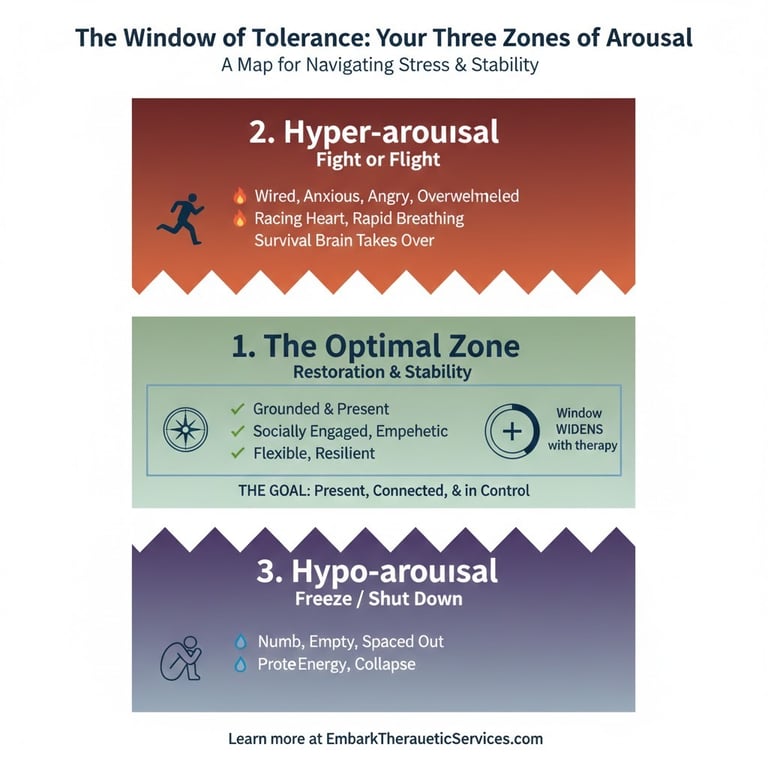
Outside of this window, individuals may experience a range of emotional disturbances. When overwhelmed, they may react with heightened arousal, commonly recognized as fight or flight responses, which can lead to anxiety and agitation. Conversely, when feeling under-stimulated, an individual can fall into a state of hypo-arousal characterized by numbness or disengagement. Understanding this dynamic is vital, as it enables individuals to recognize their emotional state and take proactive steps to regain equilibrium.
In summary, the window of tolerance not only highlights the importance of emotional regulation but also emphasizes the significance of awareness and self-care in navigating various stressors. This concept is fundamental for those who seek to enhance their coping mechanisms and improve their overall mental well-being.
The Components of the Window of Tolerance
The concept of the Window of Tolerance (WoT), developed by Dr. Dan Siegel, serves as a framework for understanding emotional regulation and stress response. Within this framework, two primary states exist beyond the boundaries of tolerance: hyperarousal and hypoarousal. These states represent the extremes of our emotional experience and are critical to recognizing how we respond to stressors.
Hyperarousal occurs when an individual experiences heightened states of anxiety, panic, or anger. This elevated emotional state manifests physically and mentally, often characterized by symptoms such as increased heart rate, rapid breathing, sweating, and an inability to focus. Individuals in a hyperaroused state may feel overwhelmed, reactive, or excessively alert. They might also display signs of irritability or aggression. This state can be triggered by various stressors, including trauma, overwhelming life events, or chronic stress, leading to a sense of being constantly on edge.
Conversely, hypoarousal is characterized by feelings of numbness, depression, or disconnection from oneself and the environment. This state often arises when the mind and body become overwhelmed to the degree that they shut down as a coping mechanism. Symptoms of hypoarousal include fatigue, lack of motivation, dissociation, and a general sense of disengagement from emotions or surroundings. Those experiencing hypoarousal might struggle to connect with others and can find it challenging to feel pleasure or excitement. Recognizing the signs of both hyperarousal and hypoarousal is essential for individuals aiming to navigate their experiences within the Window of Tolerance, facilitating a better understanding of their emotional responses.
Additionally, understanding this psychological framework can lead to improved coping strategies. Individuals can learn to identify their own thresholds and develop personalized tools and techniques to remain within their Window of Tolerance. This could include grounding exercises, mindfulness practices, or seeking therapeutic support when necessary. When individuals can effectively manage their emotional states, it significantly enhances their capacity for self-awareness, which is integral for healing and personal growth. As a result, a comprehensive understanding of the Window of Tolerance not only supports individual health but also fosters healthier interactions with others, thus contributing to deeper and more meaningful relationships.
How to Recognize Your Own Window of Tolerance
Recognizing your own window of tolerance is a vital process in developing emotional awareness and self-regulation skills. This awareness allows individuals to identify their emotional and physiological responses during stressful situations. To begin this journey, mindfulness practices can serve as a foundational tool. Mindfulness involves being present and fully engaged with the moment, which can help individuals tune into their internal state. Start by observing your breath, noticing how your body feels, and becoming aware of your thoughts without judgment. This practice can illuminate when you feel calm and regulated within your window of tolerance, as well as when you feel anxious or overwhelmed outside that window.
Journaling prompts can also aid in recognizing your window of tolerance. Consider setting aside time each day or week to reflect on your emotional experiences. Ask yourself questions such as: "When do I feel most at ease?" or "What situations cause me to feel overwhelmed?" Writing your responses can help clarify patterns in your emotional regulation. Additionally, note any physiological sensations you experience during these times, such as increased heart rate or muscle tension, as these could signal an exit from your window of tolerance.
Another effective technique involves reflection exercises. Take a moment to think about recent events that triggered strong emotional responses. Were there signs indicating you were within or outside your window of tolerance? Engaging in discussions with trusted friends or professionals can provide valuable insights. They may help you identify moments where you might not have recognized your emotional states, offering a different perspective on your experiences.
By incorporating these techniques into your routine, you can learn to recognize your window of tolerance more effectively, leading to improved emotional resilience and coping strategies.
Strategies for Expanding Your Window of Tolerance
Expanding one's window of tolerance is essential for enhancing emotional regulation and resilience. A variety of strategies can help individuals cultivate a greater capacity to process emotional experiences. Among these, grounding exercises are particularly beneficial. Grounding techniques involve redirecting focus to the present moment, often through sensory experiences. For example, taking notice of the environment by identifying five things one can see, four things one can touch, three things one can hear, two things one can smell, and one thing one can taste can stabilize overwhelming emotions.
Breathing methods also play a crucial role in this process. Techniques such as deep diaphragmatic breathing can be effective in managing anxiety and promoting relaxation. By inhaling deeply through the nose, holding the breath for a moment, and exhaling slowly through the mouth, individuals can activate their body's relaxation response, which may assist in expanding their window of tolerance.
In addition to these self-directed techniques, therapeutic approaches like Eye Movement Desensitization and Reprocessing (EMDR) and Dialectical Behavior Therapy (DBT) offer structured support for enhancing emotional regulation capabilities. EMDR, particularly effective for trauma, encourages individuals to reprocess distressing memories, which can lead to increased emotional resilience. Meanwhile, DBT focuses on skills such as mindfulness, distress tolerance, and emotional regulation, which can empower individuals to navigate their emotional landscapes more effectively.
While self-help strategies are valuable, individuals should not hesitate to seek professional support when needed. Mental health professionals can provide tailored guidance and interventions, ensuring that strategies for expanding the window of tolerance are appropriate for each unique situation. Prioritizing self-care and reaching out for help represents a proactive step in enhancing one's emotional well-being.
The Role of Therapy in Understanding the Window of Tolerance
Therapy plays a crucial role in helping individuals recognize and expand their window of tolerance, particularly for those who have experienced trauma or extreme stress. Within the therapeutic context, clients can explore their emotional responses and develop a greater understanding of their own limits regarding tolerating emotional experiences. This understanding can be pivotal in managing symptoms of anxiety and emotional dysregulation.
One effective approach is trauma-informed therapy, which is designed to recognize the impact of trauma on an individual's mental health. This modality prioritizes safety and empowerment, allowing clients to engage in the therapeutic process without feeling overwhelmed. By gently guiding clients through their experiences, therapists can help them identify triggers that lead to dysregulation outside their window of tolerance. This insight is fundamental in fostering better emotional resilience and stability, as clients learn to navigate their responses more effectively.
Another valuable therapeutic technique is somatic experiencing, which emphasizes the connection between the mind and body. This approach encourages individuals to tune into their physical sensations, allowing them to process trauma stored within the body. Somatic experiencing promotes awareness of bodily cues, helping clients to discern when they are approaching the limits of their window of tolerance. By cultivating this awareness, clients can develop healthier coping strategies and techniques to regulate their emotional states.
Furthermore, therapy provides a supportive environment where individuals can practice skills necessary for expanding their window of tolerance. As they learn to manage their responses to stressors and trauma, clients can experience profound growth in their emotional and psychological wellbeing. In essence, various therapeutic modalities work synergistically to empower individuals in understanding their window of tolerance, which is essential for cultivating long-term emotional health.
Conclusion: Embracing Your Window of Tolerance
Understanding your window of tolerance is essential for navigating the complexities of emotional regulation and mental health. It involves recognizing the range of emotions and physiological responses to stress that one can endure before feeling overwhelmed or shut down. This awareness is the first step in fostering resilience and encouraging personal growth.
Throughout this guide, we have explored the significance of the window of tolerance in managing a variety of emotional states. Individuals are encouraged to observe their reactions in different situations and to reflect on how these responses fall within their personal thresholds. Acknowledging your emotional reactions helps in normalizing experiences of anxiety, anger, or numbness, thereby enhancing emotional intelligence.
Moreover, expanding one's window of tolerance is not an overnight process. It requires a gradual approach that combines self-awareness, mindfulness, and techniques such as grounding exercises or seeking therapeutic support. These strategies can facilitate a more profound understanding of one's emotional landscape and empower individuals to operate within a broader range of their emotional experiences.
As readers embark on their journey towards a better grasp of their window of tolerance, it is crucial to embrace all emotional responses without judgment. This acceptance not only aids in emotional growth but is also an act of self-compassion. Remember that challenges along the way are a natural part of this process. By committing to practice and patience, individuals can gradually expand their window of tolerance, leading to healthier coping mechanisms and overall well-being.
Why is the Window of Tolerance Important?
The concept of the Window of Tolerance is crucial in the realm of mental health, as it delineates the range of emotional arousal within which an individual can function effectively. When individuals are operating within this window, they are better equipped to manage their emotions, make rational decisions, and engage in healthy interpersonal relationships. Understanding the Window of Tolerance can also enhance emotional regulation, providing individuals with the tools necessary to navigate life’s challenges more effectively.
For those who have experienced trauma, the Window of Tolerance can be particularly significant. Trauma can expand or contract this window, making it difficult for individuals to remain within their optimal zone of emotional regulation. For instance, some may find themselves frequently triggered and entering a state of hyperarousal—characterized by heightened anxiety or irritability—while others may experience hypoarousal, resulting in dissociation or numbness. Recognizing the signs of being outside the Window of Tolerance is a fundamental step in addressing these challenges and seeking appropriate support.
About the Author
This article is written by licensed therapists at Embark Therapeutic Services, LLC who specialize in trauma-informed and nervous system–aware care.
Connect
© 2026 Embark Therapeutic Services, LLC. All rights reserved.
If you're in crisis or feeling unsafe, you don't have to handle it alone. Immediate support is available.
Embark Therapeutic Services, LLC
Navigate
Care Locations
Trauma-informed mental health care grounded in compassion, collaboration, and evidence-based practices.
The information on this website is for educational purposes only and is not a substitute for professional mental health care.
Practice Information
Telehealth services available for Oregon residents